
What’s Happening?
War in the Middle East
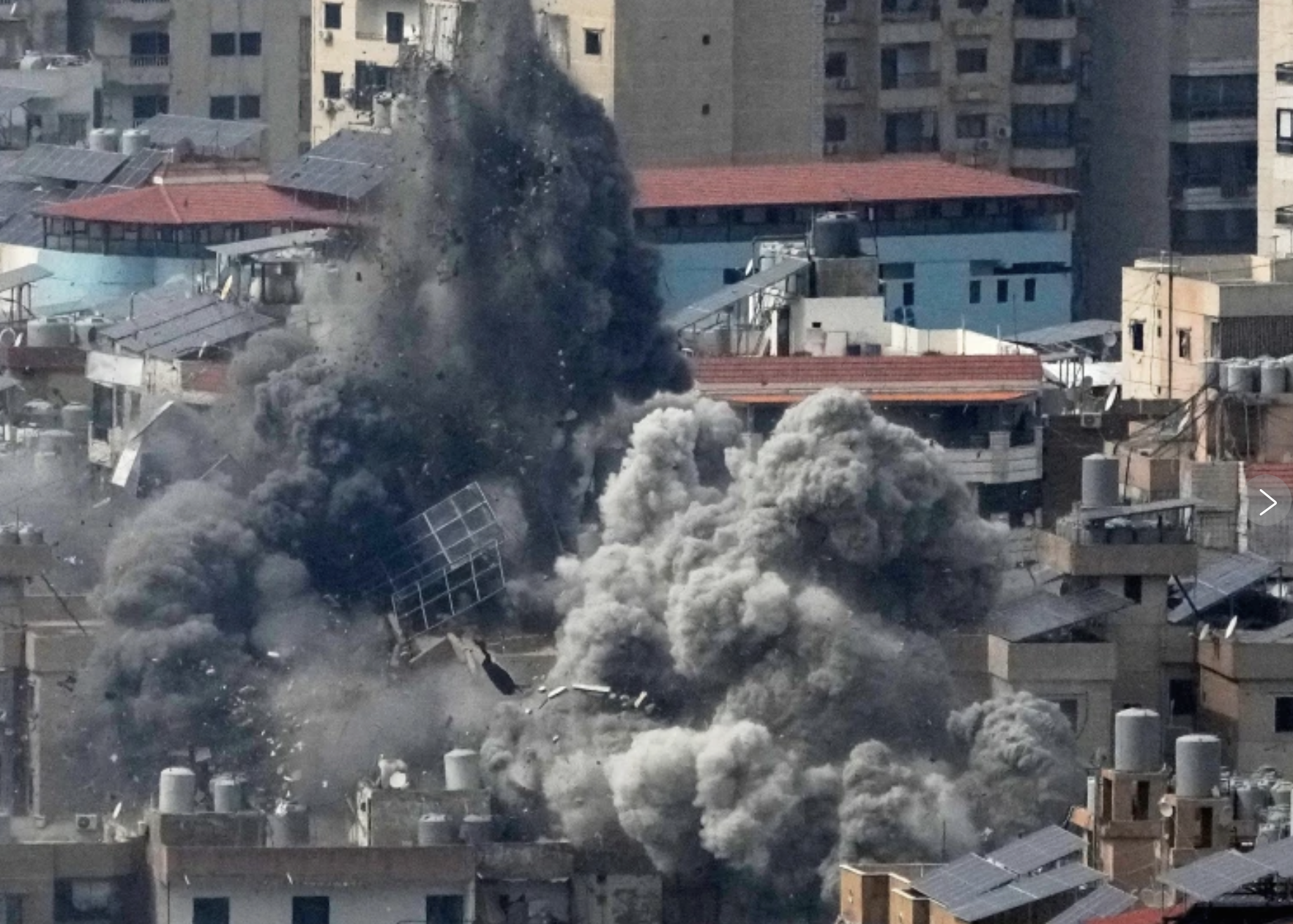
On Saturday, February 28, the U.S. and Israel launched airstrikes on Iran that killed Supreme Leader Ali Khamenei and at least 201 others. More than 750 people were injured. A girls’ school was also hit, killing at least 153 people, though it remains unclear who was responsible for that strike.
Iran responded by firing missiles at Israel and U.S. military bases across the region, including in Bahrain, Kuwait, the United Arab Emirates, and Qatar. Six U.S. service members were killed in the broader conflict after an Iranian strike hit a base housing American troops in Kuwait.
The Trump administration says the strikes followed failed U.S.–Iran negotiations mediated by Oman and were intended to cripple Iran’s military and nuclear capabilities. Despite declaring in his election victory speech, “I’m not going to start wars, I’m going to stop wars,” Trump has authorized the use of force in seven countries and again chose military action over diplomacy.
The bipartisan War Powers Resolution on Iran, introduced by Senators Kaine and Paul, as well as Representatives Khanna and Massie, have both narrowly failed to pass this week. Keep reading, there’s more on this below.
Here’s the takeaway: The true reason for the strike remains unclear. Administration officials have offered conflicting explanations. Secretary of State Marco Rubio said the U.S. and Israel acted preemptively to stop a potential Iranian attack on Israel, though no evidence has been presented. Meanwhile, Israeli Prime Minister Netanyahu has reportedly pressured the U.S. to take military action against Iran. If the decision was driven by Israeli pressure, it raises serious questions about who is shaping U.S. foreign policy.
Trump’s stated objectives — and the contradictions within them
The Trump administration has struggled to articulate a consistent rationale for the military operation. While officials have offered mixed explanations, several objectives appear repeatedly in public statements:
- Weakening an already fragile government
- Dismantling Iran’s nuclear program, missile systems, and naval capabilities to significantly degrade its military
- Limiting Iran’s ability to support regional proxy groups
Policy Perspectives
Here’s the thing: this war against Iran is fundamentally unconstitutional and illegal.
The administration and Republican leaders are sending mixed signals, with no clear timeline or exit strategy. Trump has warned that the conflict could last months, a risk he noted he is willing to take, while other Republicans have claimed it could be resolved in weeks.
The strikes were reckless and created a confusing, uncertain environment. Launched without congressional authorization, the administration acted unilaterally with no defined endpoint, no clear plan for success, and effectively sidelined Congress, the branch the Constitution entrusts with the power to declare war. This combination of ambiguity and executive overreach highlights the administration’s unpreparedness for another war and the serious risks of acting without oversight.
It’s not a popular move among Americans:
- 43% disapprove of the strikes (Reuters/Ipsos poll)
- 48% somewhat or strongly disapprove (YouGov survey), including 78% of Democrats and 55% of Independents
Americans are rightfully wary about being dragged into another protracted, vaguely defined war. As the American fatalities increase, support for this war is likely to decline further.
More funding for more wars?
Republicans are considering an emergency funding bill for military weapons, with Deputy Defense Secretary Steve Feinberg reportedly requesting $50 billion. Trump has also invited defense industry executives to the White House to discuss replenishing weapons stockpiles following the strikes.
Approving this funding would essentially endorse an unauthorized war, diverting taxpayer dollars from programs like Medicare and Social Security to fuel a conflict launched without congressional approval.
So let’s make this very clear to Congress: no more taxpayer dollars for endless wars.
This week, both the House and Senate voted on measures related to U.S. military authority in Iran. The bipartisan-sponsored War Powers Resolutions in both houses of Congress sought to limit the president’s authority to wage war on Iran.
The measure failed 47–53 in a largely partisan vote: Rand Paul was the only Republican senator to support it, while John Fetterman was the only Democrat to oppose it; all other Democrats voted in favor. A similar effort in the House, led by Representatives Ro Khanna and Thomas Massie, also failed, 212–219.
This outcome is deeply disappointing, and Congress needs to hear from us.
On Our Radar
Could the war in Iran impact elections?
With nine months until the midterms and some states already holding primaries, Trump’s low approval rating could hurt Republican candidates. Rising U.S. casualties and higher gas prices could push his numbers even lower.
Trump has suggested delaying or canceling the midterms, which is illegal, but the administration could use the Iran war as a pretext to declare a national emergency and influence the vote. These moves are more aggressive than past attempts and are closely tied to voter suppression, including pressure on Congress to pass the SAVE America Act, which could disenfranchise millions.
All of this shows why our vote matters. Free and fair elections give us a voice in government, influence over judges and committee heads, and a say in the policies that shape our daily lives. If we want change, it starts at the ballot box, so make sure you are registered to vote.
Protect Our Rights, Support Our Work
Hate, voter suppression, and unconstitutional actions are on the rise, but together, we can fight back. Your donation helps Emgage Action hold leaders accountable, protect our communities, and defend our right to vote. Every dollar counts. Give today to make sure our voices are heard.