What's Happening?
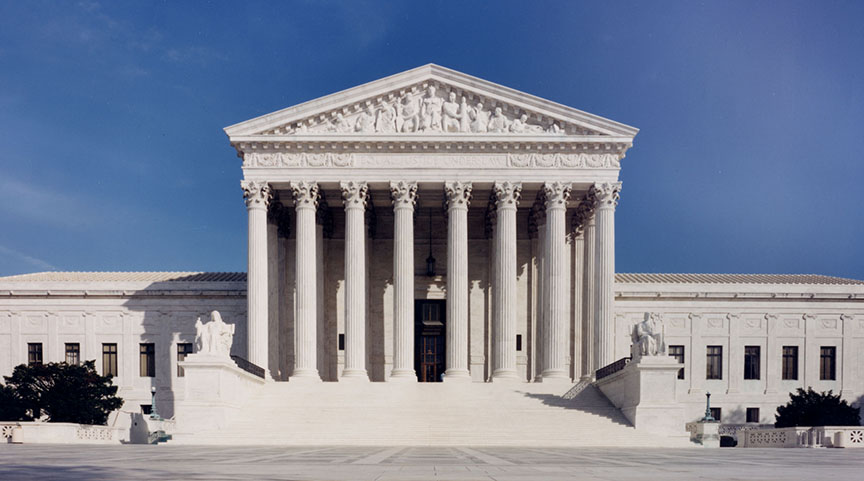
At the end of April, the Supreme Court issued a major ruling in Louisiana v. Callais that effectively invalidates the Voting Rights Act, a landmark law designed to protect against racial discrimination in voting.
Background: How did we get to this lawsuit?
Our story starts in Louisiana. After the 2020 Census, Louisiana adopted a congressional map with only one majority-Black district out of six, despite Black residents making up about one-third of the population. Black voters and civil rights groups sued, arguing the map violated the Voting Rights Act by diluting Black voting power, and they ultimately prevailed. To avoid further legal intervention, the state enacted a new map in 2024 (SB 8) creating two majority-Black districts. That map was then challenged in Callais by a group of “non-African American” voters, and in a 6–3 decision, the Supreme Court agreed with their claim that SB 8 unconstitutionally classified voters based on race.
What has changed about the Voting Rights Act?
In Callais, the Supreme Court said that using race as a basis for redistricting to follow the Voting Rights Act conflicts with the 14th Amendment of the Constitution. Moving forward, it will not be enough for voters to show that a congressional or other map has racist effects. They will have to show evidence of intentional discrimination.
The problem? This decision authored by Justice Alito has raised the burden of proof for plaintiffs such that unless lawmakers make explicitly racist remarks or otherwise show their motivations are racial discrimination, succeeding with race-based voter discrimination claims will be almost impossible.
Make the Supreme Court Great Again
The Supreme Court has tried to rewrite the Voting Rights Act before to require proof of intentional discrimination, in City of Mobile v. Bolden in 1980. In response, Congress, with bipartisan support, rejected that standard and said discriminatory effects were enough. Now the Court has brought back the intent requirement, overriding Congress, because the Court claims the Constitution requires this. That means that any future law Congress passes to restore the Voting Rights Act will run into the same problem, unless the Supreme Court’s majority changes.
Up until the Callais ruling, Section 2 was the last remaining gemstone in the “crown jewel” that is the Voting Rights Act after the Supreme Court struck down Section 5 in a 2013 ruling Shelby County v. Holder. Section 5 had required certain state and local governments with a history of voting discrimination to get permission from the federal government before changing rules that affect the right to vote or the election process.
Policy Perspectives
The Court’s majority argues that fixing racial discrimination can itself be discriminatory, a view that defies logic. It overlooks the already rigorous burden required to prove voting discrimination and ignores real-world impacts.
Overall, the racial turnout gap has grown everywhere since 2012, coinciding with a period where partisan gerrymandering has worsened and the Voting Rights Act has been weakened by other Supreme Court decisions. After the Shelby County ruling, the gap between white voter turnout and Black voter turnout has widened almost twice as quickly in the South than in other states. The Brennan Center for Justice estimates that in 2022, nearly 14 million more voters of color would have cast a ballot if there were no racial gap in voter turnout.
The Callais decision is unprecedented in many ways: its decimation of a landmark law, its judicial overreach, and its timing. Typically, the Supreme Court must wait 32 days to issue its opinion and send its judgment for enforcement-which here would be the decision to throw out Louisiana’s map. The Court also typically does not issue rulings impacting elections close to an election date to avoid voter confusion. Here, at the request of the winning parties, the Supreme Court instead fast-tracked the opinion to land while absentee voting were already underway in Louisiana’s primary election. The Louisiana governor used this moment to suspend primary elections for House congressional seats.
By the time Callais was decided, more than 100,000 Louisiana voters had gotten their absentee ballots and nearly 42,000 had voted by mailing them back. The Court’s decision was essentially election intervention. Meanwhile, in states like Tennessee, Florida, and South Carolina, lawmakers have redrawn, or are preparing to redraw congressional maps in ways that dilute the voting power of communities of color.
As an organization that cares deeply about voting rights and our communities’ full participation in elections, we can’t pretend this isn’t a blow to our right to vote. But we can take away this: our votes have never been more important, especially at the state and local levels. We can’t be redistricted out of our statewide elections. And we are the ones who elect our leaders at the state, county, and local levels who oversee redistricting in most states. It illustrates the important point that every single vote matters in every single election.
A quick story: Last year, Texas abruptly redistricted at the behest of President Trump, who demanded five additional Republican seats. Texas was quickly sued on the basis that the new map is racially discriminatory (that lawsuit is ongoing and would take its own edition of Policy & Perspectives) but that map is in use this year anyway. Analysts now say the redistricting might net Republicans only two seats. Why? In part, the masterminds of the redistricting drew their lines assuming certain voters would turn out and certain voters would stay home. At the grassroots level, we have the opportunity to upend the plans politicians made to dilute our voting power by upending the assumptions they made about us. And we do that by voting and activating our communities to vote.
On Our Radar
Sneaking in the ballroom
Republicans’ latest DHS funding bill includes $1 billion tied to security upgrades for President Trump’s White House ballroom project buried inside a nearly $70 billion package that would also massively expand ICE and CBP funding through the rest of his presidency. More than $60 billion of the bill is dedicated to immigration enforcement, despite Democratic objections following the deaths of two American citizens at the hands of federal agents earlier this year.
Boat strikes continue
The U.S. military carried out another deadly strike last week on a boat allegedly linked to drug trafficking in the Caribbean, bringing the reported death toll from the Trump administration’s anti-“narcoterrorism” campaign to at least 188 people since September. The administration has provided little public evidence that the targeted vessels were carrying drugs. Critics and legal experts have increasingly raised concerns over the legality of the strikes, warning that the U.S. is carrying out extrajudicial killings under the banner of the war on drugs.
Online learning platform hacked
Canvas, the online learning platform used by thousands of colleges and K-12 schools, suffered a major outage last Thursday after a hacking group claimed responsibility for a massive data breach affecting millions of students and teachers. “ShinyHunters” says it accessed personal information and private messages tied to nearly 9,000 schools after Instructure, Canvas’s parent company, allegedly failed to address earlier security vulnerabilities. The outage disrupted coursework and final exams at universities across the country, raising fresh concerns about cybersecurity, student privacy, and the growing vulnerability of critical educational infrastructure.
Protect Our Rights, Support Our Work
Hate, voter suppression, and unconstitutional actions are on the rise, but together, we can fight back. Your donation helps Emgage Action hold leaders accountable, protect our communities, and defend our right to vote. Every dollar counts. Give today to make sure our voices are heard.