What's Happening?
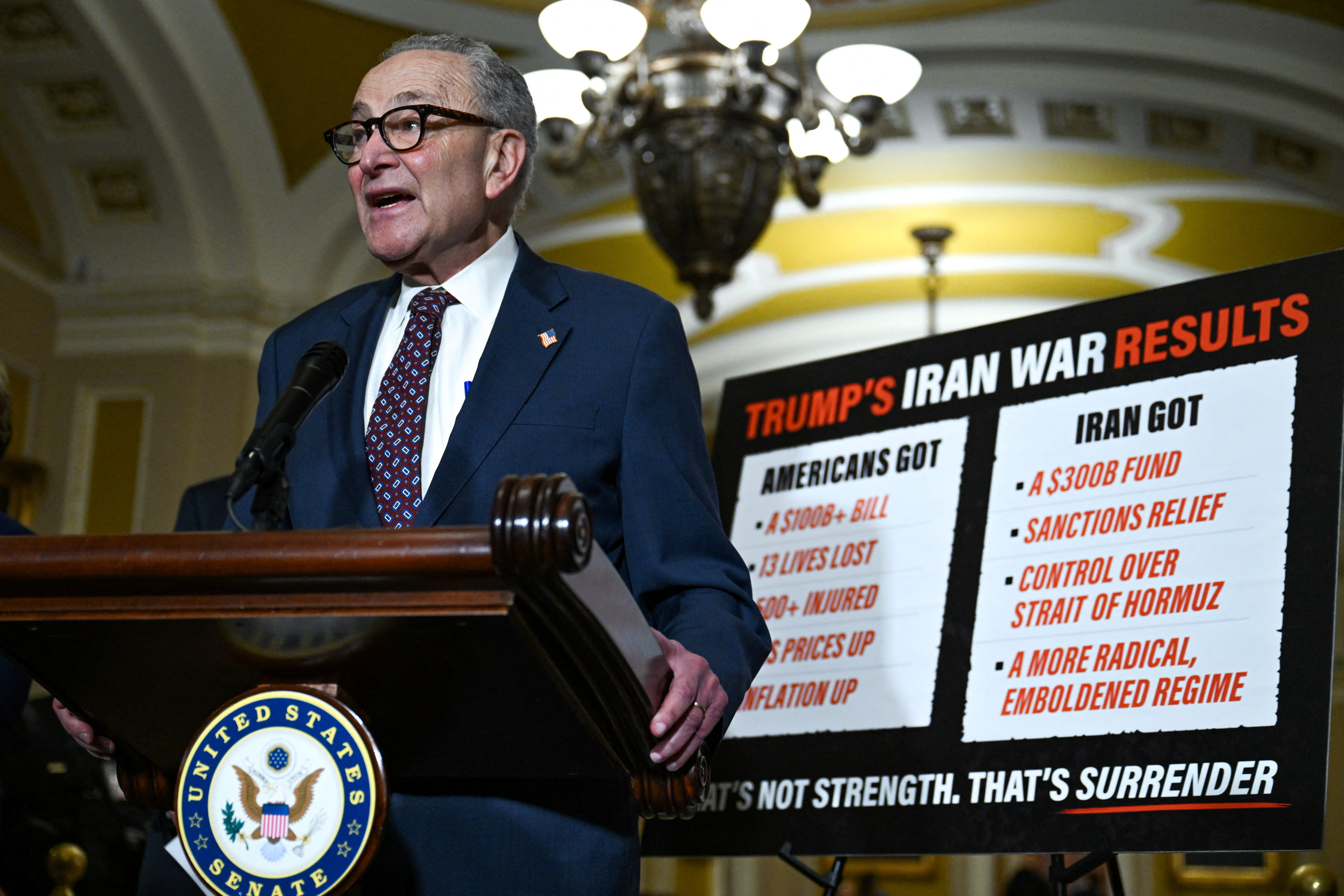
This week, Senate Democrats blocked the $1.15 trillion National Defense Authorization Act (NDAA), the annual bill that funds the U.S. military. While the legislation has historically enjoyed broad bipartisan support, this year's debate became a partisan fight over defense spending and the Trump administration's military actions in Iran. The Senate voted 50-46, mostly along party lines, but fell short of the 60 votes required to advance the bill to debate.
No Blank Check: Senate Clash Over Iran War Powers and Israel Military Cooperation
Democrats’ primary objections centered on the Trump administration’s military actions in Iran, concerns over congressional war powers, and broader spending disputes. The vote does not end the NDAA process, but it raises the stakes for future negotiations over Iran-related amendments, funding priorities, and Congress’s authority over military action.
A separate provision in the NDAA has also drawn attention in the broader debate over U.S. military commitments abroad. Section 219 would establish a “United States–Israel Defense Technology Cooperation Initiative,” expanding bilateral research, development, and defense technology cooperation between the two countries.
The initiative would reportedly cover areas including missile defense, counter-drone systems, artificial intelligence, autonomous systems, cyber capabilities, quantum technology, and directed energy. Supporters argue the provision would strengthen defense innovation, improve military interoperability, and accelerate the development of emerging technologies. Critics argue it could deepen U.S. military ties with Israel without sufficient oversight, raising questions about technology transfers, export controls, cybersecurity safeguards, and congressional review.
Reps. Thomas Massie and Ro Khanna supported an effort to remove the provision, but the attempt did not succeed during the House committee and rules process.
A Separate House Vote Signals Changing Politics on Israel
A House vote this week underscored growing divisions over U.S. military aid to Israel. Representative Thomas Massie (R-KY) introduced an amendment to remove $3.3 billion in military aid to Israel from the FY2027 National Security-State appropriations bill. The amendment failed, 314-104, but the vote revealed a growing divide within the Democratic Party.
Massie was the only Republican to support the amendment, while 103 Democrats voted in favor of cutting the funding, nearly half of the Democratic caucus. The vote reflects increasing skepticism among Democrats about unconditional military aid to Israel, particularly in light of the Netanyahu government's actions in Gaza, Lebanon, and the broader regional conflict involving Iran.
Although this vote was on a different bill than the NDAA and did not affect Section 219, it signals growing Democratic skepticism toward unconditional military support for Israel. That shift could shape future debates over U.S.-Israel defense cooperation and military aid.
Policy Perspectives
After weeks of internal debate over how to advance the SAVE America Act (the Act), House Republicans ended the standoff by shifting their strategy, instead of attaching the measure to the NDAA, leadership is now seeking to include it in a must-pass national security appropriations bill.
The initial effort to combine the Act with the NDAA through a procedural maneuver stalled after opposition from some House Republicans. Rather than continue the impasse, leadership moved toward attaching the election legislation to the FY2027 State Department and national security appropriations package, a bill lawmakers face significant pressure to pass.
The Act, if passed, would require documentary proof of U.S. citizenship to register for federal elections and photo identification to vote. Acceptable documents include passports, birth certificates, naturalization certificates, and other approved records, with additional verification for people unable to provide them immediately. Critics say these requirements could create new barriers for eligible voters, particularly those who lack current ID, cannot readily obtain citizenship documents, or face the cost and time of in-person verification.
The shift in strategy reflects a broader congressional tactic, using must-pass legislation as a vehicle to advance separate, politically contested priorities. While supporters argue the SAVE America Act strengthens election security, critics contend that attaching it to unrelated national security funding limits transparency and forces lawmakers to vote on multiple consequential issues at once.
Attaching the Act to a “must-pass” national-security bill puts lawmakers in a bind: vote for the full package to keep essential programs funded, or vote no and risk delaying it. That pressure can help a controversial measure advance without a separate debate or vote. A standalone bill would let Congress examine, amend, and vote on the SAVE America Act on its own merits.
Bottom line: The SAVE America Act fight is no longer only about the policy itself, but about the process being used to move it forward. After ending the blockade, House Republicans are now attempting to advance the measure by attaching it to legislation Congress is under pressure to pass.
ON OUR RADAR
Trump Reverses Course on ICE Traffic Stops
After ICE reportedly moved to scale back traffic stops following fatal encounters involving immigration officers, President Trump reversed course and directed the agency to continue the practice as part of his administration’s immigration enforcement strategy. The decision has reignited debate over the role of traffic stops in immigration enforcement, with supporters arguing they are a necessary tool for locating individuals subject to removal, while critics warn they could lead to unnecessary encounters, raise civil liberties concerns, and create greater scrutiny over officer accountability and use of force.
Senate Seat or Family Succession?
After Sen. Lindsey Graham’s death, his sister Darline Graham was sworn in to fill his Senate seat, making her the first sibling to directly succeed a deceased senator. While supporters described the appointment as a way to ensure continuity and representation, critics raised concerns about political dynasties and whether family ties, not public choice, played too large a role in determining who holds elected office. The appointment has reignited broader debates over succession rules, political influence, and the role of family networks in American politics.
Who Controls the DOJ? Senate Grills Trump’s Pick
President Trump’s pick for attorney general, Todd Blanche, faced tough questioning from Democrats during his confirmation hearing over the Justice Department’s independence, ICE enforcement actions, and the administration’s handling of politically sensitive investigations. Blanche defended the department’s actions while pledging to follow the law, but the hearing highlighted growing concerns over DOJ oversight and the role of the attorney general under the Trump administration.
RFK Jr. Faces Scrutiny Over Parasite Outbreak Monitoring
A nationwide outbreak of cyclosporiasis, a foodborne illness caused by the parasite Cyclospora (aka "MAHA Blast"), has sickened hundreds of people across multiple states, including Georgia. The outbreak has raised questions about gaps in public health surveillance after reports that the parasite was no longer included in certain federal monitoring requirements. Health officials are still investigating the source, which is linked to contaminated food or water, while the episode renews debate over the importance of robust disease tracking systems.
Protect Our Rights, Support Our Work
Hate, voter suppression, and unconstitutional actions are on the rise, but together, we can fight back. Your donation helps Emgage Action hold leaders accountable, protect our communities, and defend our right to vote. Every dollar counts. Give today to make sure our voices are heard.