What's Happening?
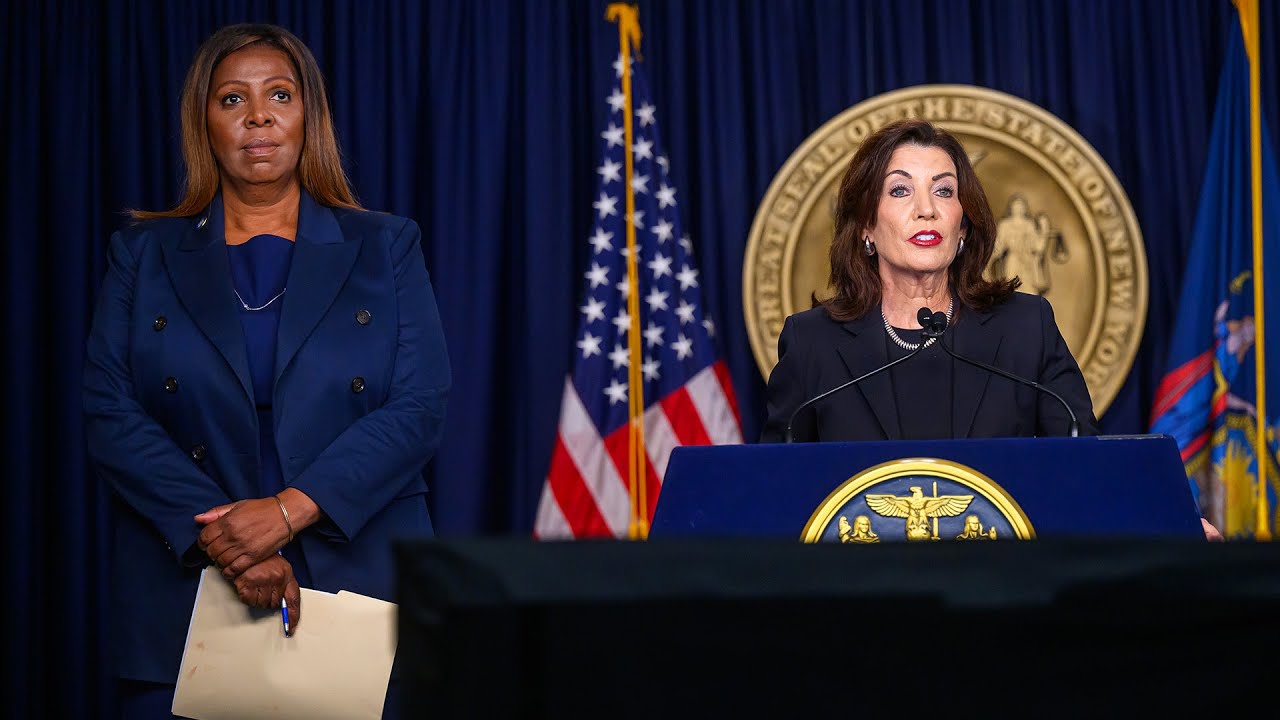
Last week, Attorney General (AG) Letitia James and Governor Kathy Hochul announced they are taking proactive legal action to shield New York’s immigrant communities by decoupling local law enforcement from federal immigration enforcement agencies, like ICE. Through the new Office of Immigrant Trust, AG James has requested 12 local NY law enforcement agencies to begin ending their agreements with ICE by August 25, 2026.
What is a Section 287(g) Agreement?
Originally enacted as part of the Illegal Immigration Reform and Immigrant Responsibility Act of 1996, Section 287(g) was integrated into the Immigration and Nationality Act, authorizing ICE to delegate specific federal immigration enforcement tasks directly to state and local police officers. It’s a voluntary program, meaning law enforcement doesn’t have to take part in ICE’s enforcement regime, but an agency can only participate in a 287(g) as long as the agreement doesn’t clash with state law.
Since Trump took office, ICE has aggressively been recruiting as many local law enforcement agencies as possible, signing 2,179 agreements so far, which covers 39 states and two U.S. Territories. Trump’s goal to remove 20 million people is easier to achieve when local police are tasked with the responsibility and turned into de facto ICE agents. Through these agreements, police are redeployed from local public safety matters to immigration enforcement duties, such as interrogating people, asking for citizenship status and proof, or processing paperwork and people for deportations.
The first NY agency to sign a 287(g) agreement was in 2018 during the first Trump administration and was met with local pushback. With Trump’s second term, the number of agreements grew, allowing NY local law enforcement to become an extended arm for ICE. Hochul and James’ announcement serves as a direct response to Trump’s coordinated federal enforcement campaign, which includes aggressive ICE operations in cities, federal litigation demanding voter registration rolls, and the expansion of surveillance capabilities. By refusing to comply with federal requests for bulk data and restricting access to state-controlled property, New York is asserting its authority to protect residents from federal overreach.
Policy Perspectives
A Weapon for ICE
Deputizing local police into weapons for ICE is already terrifying. But coupled with Trump’s draconian immigration policies, it’s downright malicious for local police to enter into these agreements to target their own community.
A 287(g) agreement magnifies the fear that immigrants are facing, which is exactly the kind of environment Trump wants, by helping the administration carry out mass deportations. What’s worse is that by amplifying the threat of a potential deportation or detainment, immigrants are likely unable to carry on with their lives, like going to school or seeking out medical care.
This decision demonstrates the power of states to successfully challenge harmful federal policies and protect their communities. Hochul and James’ action is the perfect blueprint for states to fight back against Trump’s attempts to divide the nation and protect us from federal overreach.
It’s also a strategic move right before the midterms, protecting New Yorkers from voter suppression and disenfranchisement. By withholding voter rolls from ICE, it prevents the government from executing pre-election purges and safeguards voter information. Moreover, it guarantees accountability by ensuring AG James has oversight of local police, rather than ICE or the federal government, which has made clear it will not protect Americans from racial profiling, aggression, or arbitrary arrests. Law enforcement will remain accountable to local standards of conduct, instead of Trump’s. And with ICE out of the picture, our communities are safer, more secure, and less vulnerable.
State Leadership Matters When Federal Rights Are at Risk
States and municipalities looking to cut ties with federal immigration enforcement agencies like ICE now have a model to emulate. Through policies or executive orders, states can strictly prohibit federal agencies from utilising state or city property or agencies for immigration enforcement operations. To ensure accountability, state legislatures should oppose legislation that removes local police and similar law enforcement agencies from the AG’s oversight, necessary to prevent unfettered and unauthorised ICE collaboration.
Moreover, with elections coming up, states need to deny federal requests for bulk voter data that lack judicial warrants or clear oversight protocols. States can pass stronger protections to safeguard elections and ensure local resources are not misused.
New Jersey’s passage of the John R. Lewis Voter Empowerment Act shows what is possible when state leaders, advocates, and communities come together to protect voting rights. Emgage's team in New Jersey played a key role in advancing this historic law to ensure our community was mobilized and our voices were heard. We're working to mobilize legislatures in other states to do the same across the country.
ON OUR RADAR
Trump’s Iran War Escalation Leaves Children Among the Dead
As the Trump administration intensifies its military campaign against Iran, a U.S. strike on a residential building in Qeshm City reportedly killed a 2-year-old child and their family, while two other children were pulled wounded from the rubble. The attack comes amid mounting reports of civilian casualties, including hundreds of children killed since the conflict began, as questions grow over the human cost and lack of a clear strategy behind the escalating war.
Senate confirms Jay Clayton as Director of National Intelligence
In a 51-47 vote, the Senate voted to confirm Jay Clayton as the new National Intelligence Director. Clayton was the former chair of the Securities and Exchange Commission under the first Trump administration and an attorney. He does not have any intelligence experience nor a broad foreign policy background. Although all Senate Democrats voted against his confirmation, both Democrats and Republicans agreed Clayton was a better pick than the acting DNI, Bill Pulte.
0 for 18: Courts Continue Rejecting Trump DOJ's Voter Roll Lawsuits
A federal judge dismissed the Trump administration's lawsuit seeking New Jersey's private voter registration database, marking the Department of Justice's 18th consecutive loss in its nationwide effort to obtain state voter roll data. The court ruled that federal law does not grant DOJ access to the state's live voter database and rejected the administration's attempt to use a recent voter registration error involving noncitizens to justify its request. The decision reinforces states' authority over election administration and raises continued questions about the legal basis for the administration's expansive voter data campaign.
Trump Says “Get It Done,” but Senate Republicans Say “Not So Fast”
President Trump’s demand that Senate Republicans fast-track a budget framework tied to the SAVE America Act before the August recess is running into resistance from his own party. Senate Majority Leader John Thune has pushed back against Trump’s pressure campaign, warning that Republicans do not yet have the votes to move forward and that the proposal needs more work. The standoff marks a rare public clash between Trump and Senate GOP leadership over the pace and direction of the party’s legislative agenda.
Protect Our Rights, Support Our Work
Hate, voter suppression, and unconstitutional actions are on the rise, but together, we can fight back. Your donation helps Emgage Action hold leaders accountable, protect our communities, and defend our right to vote. Every dollar counts. Give today to make sure our voices are heard.