
What’s Happening?
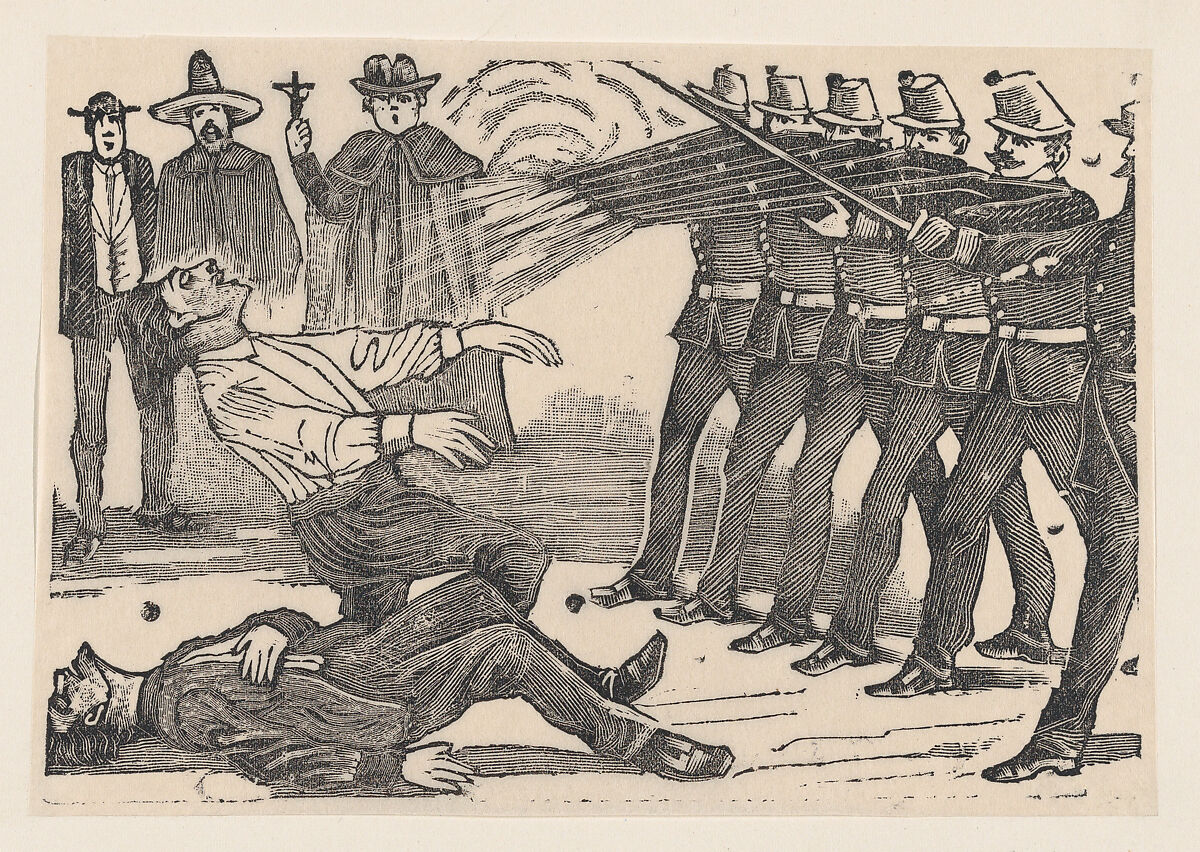
Trump has approved Secretary Hegseth’s decision to livestream the execution of former US Army psychiatrist Nidal Hasan, who was convicted in 2009 of killing 13 people and injuring 32 others at the Fort Hood military base in Texas. His execution, scheduled for December 3, will be carried out by a firing squad. Hasan was convicted of 13 counts of premeditated murder and 32 counts of attempted premeditated murder, to which he was sentenced to death. The Army did not seek terrorism charges nor was Hasan ever convicted of terrorism.
Death by firing squad is legal and not considered “cruel and unusual punishment,” as outlined by the Eighth Amendment and is currently practiced by five states, including Idaho, Mississippi, Oklahoma, South Carolina, and Utah. Earlier this year, Trump announced he will allow execution by firing squad in the federal prison system.
However, U.S. law prohibits the recording or broadcasting of executions in federal prison systems. The military also does not generally allow public executions, like Hasan’s, who was convicted in a military court, but this can be waived by the Army’s provost marshal general. Moreover, the UN Office of the High Commissioner for Human Rights has noted the livestreaming of an execution is “tantamount to a public execution” and violates the Convention Against Torture, which the Reagan administration ratified in 1988.
This is also not popular amongst Congress. Democrats have openly expressed backlash and even some Republicans are balking at the decision, calling it “beyond disgusting.” Still others like Rep. Andy Ogles (R- TN) expressed delight, stating in a social media post, “Excellent. Public execution is what this terrorist deserves.”
Is there precedence?
There is a history of Americans attending public executions, practiced largely in the 20th century, with many believing that viewing executions may serve as a deterrent. However, there is no conclusive evidence that suggests public viewing, or the death penalty in general, deters crime. Rather, there are concerns that it encourages dehumanization, desensitizes the public, and instead becomes a spectacle akin to a festival, reminiscent of the treatment of lynchings.
Additionally, because there were historically few large public spectacles, public executions attracted crowds, especially in rural communities, that would be accompanied by choirs, religious sermons, and speeches. But these events typically devolved into situations where the crowd treated the executions as celebrations or parties.
The last public execution was in 1936 of Rainey Bethea, a Black man who was hanged for allegedly raping a white woman, but who was not charged with murder. In such cases, these executions drew crowds, and accounts typically described spectators as eager to watch and jeering.
However, there has never been a case of an execution that has been broadcast live to the public. The closest examples would be Timothy McVeigh, the Oklahoma City bomber, whose execution was watched in person or via closed-circuit television by families of his victims and the recordings of former Iraqi president Saddam Hussein’s execution, which were circulated online and through television broadcasters.
Our Perspective
The decision to livestream Hasan’s execution is incredibly repulsive and breathtakingly cruel. Whilst Hasan should be held accountable for his crime, regardless of his moral questioning of the US military, broadcasting his death isn’t being done to bring justice to his victims or to hold Hasan accountable. It’s happening to placate the childish, violent whims of Hegseth and the gleeful desire of Trump’s allies to dehumanize and humiliate their opposition and critics. It’s not lost that Hasan is a Muslim man with Palestinian origins and immigrant parents, all of which Trump repeatedly has made clear he despises.
Not a martyr, but a tool for propaganda
In Mussolini’s fascist Italy and Hitler’s Nazi Germany, public executions were a popular tool of the state to spread terror, intimidation, and propaganda. In contemporary times, it’s used by cartels, criminal organizations, and terrorist groups for recruitment purposes, to intimidate the public and rivals, and showcase their control and power.
With the internet, it’s now possible for videos to reach millions of people within seconds, transforming executions from a punishment to a viral spectacle, and raises questions on how this administration is presenting capital punishment to Americans and why they want the public to witness this.
There are some clues. Hegseth is desperate to project an image of himself as a combative, intense strongman whom no one can challenge. Posting videos of pathetic attempts at pushups, usage of blunt, provocative rhetoric like “trannies” or “radicals,” even embarrassingly renaming the Department of Defense to the Department of War to highlight his juvenile wish to return to a “warrior ethos,” all these actions are designed to demonstrate a hyper-masculine understanding of how the world works. On the surface, it’s silly watching a grown man speak like he’s in an action film, but in reality, it’s part and parcel of his and Trump’s strategy to actualize a specific scenario where only “heritage Americans” exist. To achieve this, they recognize the need to drum up widespread support and acceptance of specific actions.
Insisting on livestreaming Hasan’s execution fits into this approach. Like Italy and Germany in the nineteenth century, Hegseth wants to signal absolute state power over targeted groups and deter not crime, but opposition to Trump’s values and ideology. Hasan’s crimes are not the focus of Trump and Hegseth’s ire; it’s likely his religion and ethnic background that played a part in the decision to broadcast.
Dehumanization is the point
Part of the controversy surrounding capital punishment lies with the rights and dignity of the accused. It’s widely viewed by international human rights organizations and constitutional courts as undermining human dignity and worse, it perpetuates discrimination. When the state determines who is eligible for the death penalty, and especially in countries where discrimination is embedded into normative institutions like the courts or law enforcement, it makes it difficult to argue that this punishment is for the good of society, rather than a tool of repression and fear.
So to livestream capital punishment compounds the cruelty and unethicality. It’s why countries that practice capital punishment, like Saudi Arabia, prohibit filming and maintain certain restrictions to protect rights. Governments and tech companies have sought to restrict the circulation of graphic videos, recognizing the harm it causes.
Moreover, the groups that use livestreaming for propaganda also understand the humiliation and degradation that comes with it. When the Islamic State, for example, flaunted its beheadings or distributed videos of setting people on fire, it wasn’t just contained to its supporters; millions of people watched the depravity on their phones and computers, often scrolling past it as yet another nameless person. Their videos were so frequent, people no longer experienced shock and became dehumanized to the very real suffering of a very real person. And that’s the point. The dehumanization is deliberate. This administration not only wants to make a point out of Hasan’s execution, but also to normalise the severe violation of a person’s dignity.
A person’s death is not a public spectacle. It’s not something we watch in our free time like a film or a reel. It is one of the most vulnerable moments of a person’s life and should be treated as such. For the administration to take advantage of the publicity and emotional unrest surrounding this case to promote their vile agenda, it’s beyond reprehensible and crosses a line that should never be crossed.
On Our Radar
SCOTUS Preparing to Hear More Cases
The Supreme Court is currently hearing and ruling on cases for its October term, on key oral arguments and pending decisions on major constitutional and statutory questions. Some of the key cases include Suncor Energy Inc. v. County Commissioners of Boulder County, which addresses the state-law tort liability and federal preclusion claims regarding interstate greenhouse-gas emissions, and Johnson v. United States Congress, which examines district court jurisdiction over challenges to the constitutionality of veterans’ benefits laws.
Rep. Ilhan Omar’s Home Searched by Federal Agents
Federal agents were sent to Rep. Omar’s home in D.C. as part of a yearlong criminal investigation by Homeland Security. Omar, who is frequently targeted by Trump and Republicans for being an immigrant and Somali, called the search “an attempt to target political enemies and weaponize federal law enforcement.” House Democrats put out a statement denouncing the search.
Elon Musk Has Spent More Than $366 Million in Races Making Him the Biggest Midterm Donor
Musk’s recent donations have gone to his own America PAC,” which supports Republican candidates, and to the Senate Leadership Fund, which backs GOP Senate candidates. All of the Tesla and SpaceX CEO’s donations have gone to Republican organizations, candidates, and races. He is expected to continue spending, much of which will not be publicly filed until after the election.
Honoring Alex Odeh
A resolution (H.Res. 1621) was introduced by Representatives J. Luis Correa and Rashida Tlaib to mark the anniversary of the assassination of Alex Odeh. A Palestinian Catholic, Odeh served as the Southern California Regional Director for the American Arab Anti-Discrimination Committee (ADC) until he was killed in a pipe bomb attack on his office carried out by the Jewish Defense League. The resolution acknowledges Odeh as a victim of domestic terrorism and expresses sympathy to his family.