
What’s Happening
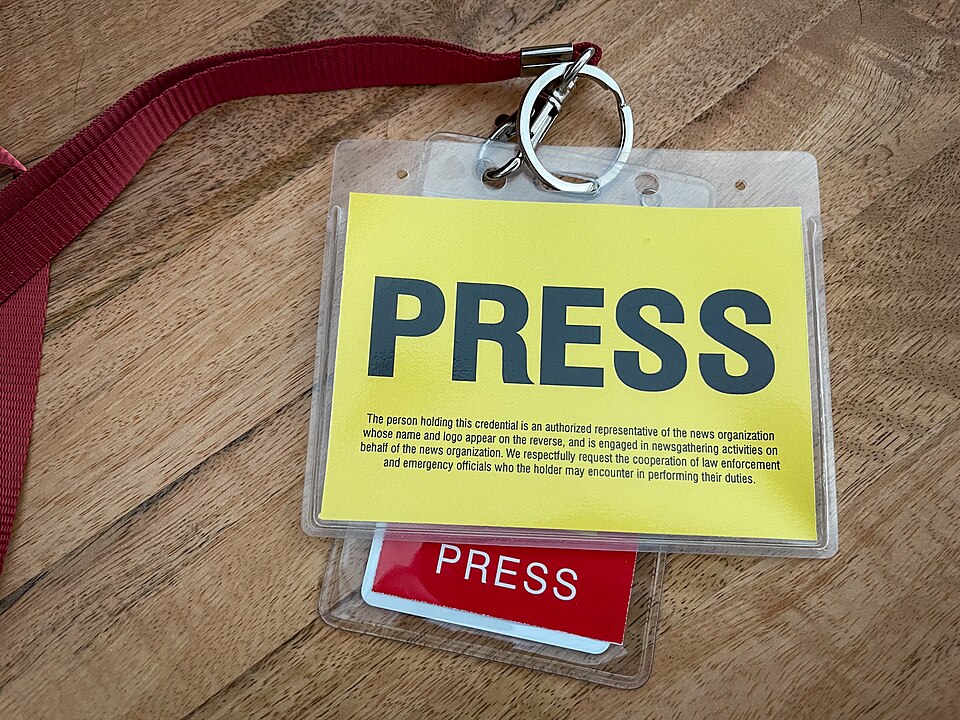
On September 18, President Trump barred CNN, MS NOW and Politico reporters from the White House after months of criticizing their coverage of his administration. Trump accused the three outlets of publishing “fiction or lies,” and by the following day, reporters who held permanent White House press passes were being denied entry.
The White House later defended the decision in a statement titled “White House Access Is a Privilege — Not a Right,” arguing that news organizations do not have a guaranteed right to White House access.
The decision quickly turned into a larger fight over how much power the White House has to decide who gets to cover the president.
The press pushed back
CNN, MS NOW and Politico filed a joint lawsuit challenging the ban. They argue that the White House violated the First Amendment by taking away their access simply because the president objected to their reporting. They also argue that they were not given proper notice,to challenge the decision before their credentials were revoked.
The dispute soon extended beyond the three outlets. CNN was scheduled to provide television pool coverage during Trump’s recent trip to New York for the U.N. General Assembly. When the White House blocked CNN from participating, ABC, CBS, NBC and Fox News declined to take its place in the press pool.
So, why does this matter? The press pool allows journalists to independently cover the president when the entire press corps cannot be there. A smaller group follows the president into places like the Oval Office or aboard Air Force One and shares its reporting with other news organizations. Without that pool, there are be fewer independent eyes and ears on the president.
The ban is blocked… for now
On September 24, U.S. District Judge Timothy Kelly temporarily blocked the ban and ordered the White House to restore the journalists’ credentials for 14 days. His ruling largely came down to how the ban was carried out. The journalists already had White House credentials, but the administration revoked them without first giving the outlets notice or an opportunity to challenge the decision.
But this does not completely end the fight over access. CNN says that even after its White House credentials were restored, it was still barred from Air Force One during a presidential trip over the weekend. The other television networks again refused to replace CNN in the press pool.
The temporary order expires on October 8, and the three outlets are now asking the court to keep the ban blocked while the lawsuit continues.
For now, the larger question remains: how far can an administration go in deciding which journalists get access when it does not like their reporting?
Our Perspective
A free and independent press is essential to a functioning democracy. It gives the public a way to understand what the government is doing and allows journalists to scrutinize those in power, even when their reporting is critical or uncomfortable. That freedom cannot depend on whether an administration believes the coverage it receives is fair.
We Have Seen What Silencing the Press Can Cost
For Muslim Americans, this conversation cannot be separated from what we have watched happen in Gaza. For years, our communities have relied on journalists on the ground to show the world what was happening while foreign reporters were largely prevented from independently entering Gaza. Palestinian journalists became the eyes and ears of the world, often documenting the devastation around them while living through it themselves.
And they have paid an extraordinary price for doing so. The Committee to Protect Journalists has documented over 180 Palestinian journalists and media workers who have been killed since October 7th 2023, along with dozens more injured or arrested. Israel has also banned Al Jazeera and raided its offices, while its military censorship system has blocked or redacted thousands of articles.
The scale of what journalists in Gaza have faced cannot be compared to a dispute over White House access. But there is a lesson here that we should not ignore: what we are willing to accept abroad can eventually find its way home.
Muslim Americans have spent years demanding that Palestinian journalists be allowed to report freely and that the world be allowed to see what is happening in Gaza. We should carry that same conviction with us now, too, because a free press depends on journalists being able to challenge those in power without losing access simply because the government does not like what they report.
On Our Radar
Refugees and Asylum Seekers Set to Lose Medicaid Coverage
Beginning October 1, many refugees and asylum seekers across the country are set to lose Medicaid eligibility under changes included in H.R. 1, the “One Big Beautiful Bill Act.” The law narrowed the categories of non-citizens who qualify for Medicaid, excluding many refugees and asylees who were previously eligible for coverage.
The effects are already beginning to come into focus. In Washington State alone, officials estimate that between 10,000 and 12,000 people currently enrolled in Medicaid could lose coverage, offering a glimpse into the scale of disruption communities may face as the change takes effect nationwide.
Trump Threatens to “Annihilate” Iran at UNGA
President Trump threatened to “annihilate” Iran during his address to the United Nations General Assembly, telling world leaders that Iran could either reach a deal with the United States or face further military action. Trump asked whether he should “drive them into hell with no chance of survival and no hope of future greatness or generations,” language that Foreign Policy noted experts have argued could amount to war crimes. Trump also used the speech to attack international accountability institutions, calling the International Criminal Court an “evil group of people” and urging its member countries to withdraw from the court.
Trump Proposal Would Change Who Is Counted in 2030 Census
The Trump administration is proposing to exclude undocumented immigrants and some other noncitizens without green cards from the population count used to determine how many seats each state receives in the House of Representatives. The proposal could exclude as much as 5 percent of the U.S. population from the count, according to estimates analyzed by The New York Times, with even larger shares potentially excluded in states like Texas, Florida and New Jersey. Beyond congressional representation and Electoral College votes, census data also helps determine how federal funding for programs like housing, health care and infrastructure is distributed. The proposal is expected to face legal challenges under the 14th Amendment, which requires apportionment based on the “whole number of persons in each state.”