
What’s Happening
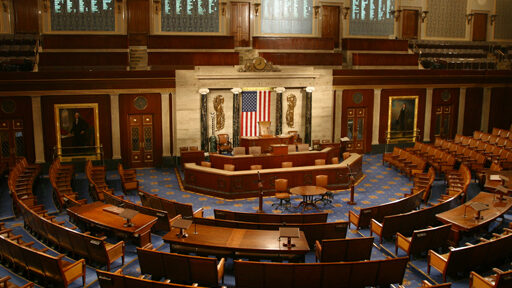
Congress is returning from recess this week, but lawmakers are expected to be in Washington for only a few days before heading back to their districts ahead of the November Elections.
While pressure remains to advance key measures, including the National Defense Authorization Act and its controversial provision expanding U.S.-Israeli military technology cooperation, House Republican leadership has shortened their September schedule, canceling two previously planned weeks of votes. The short session leaves lawmakers with limited time in Washington before returning to their districts for the campaign season.
So, what’s the plan?
The House returns Monday, September 14th, through Thursday, September 17th, before entering an extended district work period. With no regular legislative session currently scheduled, lawmakers may not return until after elections, potentially as late as November 9th.
The Senate, meanwhile, is expected to remain in session through September and before beginning its own recess the week of October 5th, with lawmakers also expected to return after the midterms.
What are they planning to do and what are we tracking?
Here is what we’re watching:
- The Senate’s next steps on the NDAA, with reports suggesting the vote could be delayed until after elections
- Tracking Senate movement on H.R. 4795, the campus boycott bill
- Lawmakers continue to consider sanctions-related measures on Iran and Russia
- The House is expected to take up legislation addressing AI infrastructure and data centers
NDAA: Senate Next Steps
The House passed its version of the NDAA before the summer recess, but Senate action remains unresolved. As a major must-pass defense bill, the NDAA remains an important legislative vehicle and one we are continuing to track closely.
We urge members to continue speaking out against Section 219, the U.S.–Israel Defense Technology Cooperation Initiative, which would expand bilateral cooperation on military research and technology.
Take Action: Tell the Senate to Vote NO
The bill also includes provisions associated with the SAVE America Act, which would require proof of citizenship for voter registration and could create barriers for eligible voters who lack access to the required documentation.
Even if Senate action is delayed, now is the time to make your voice heard.
The Campus Boycott Bill Isn’t Dead Yet
Earlier this month, the House passed H.R. 4795, the Protect Economic and Academic Freedom Act. And while there is no scheduled Senate vote confirmed, we are still monitoring this legislation and urging our community to take action.
The bill would condition colleges’ federal student-aid participation on avoiding defined commercial boycotts targeting Israel or qualifying entities without a valid business reason.
We oppose H.R. 4795 because we are concerned funding penalties could chill peaceful advocacy for Palestinian rights and undermine institutional independence. We’ll track Senate movement and urge senators to vote NO if H.R. 4795 comes forward.
Iran and Russia Sanctions on the House Schedule
The House is scheduled to consider Senate-passed legislation this week aimed at increasing economic pressure on Russia, including buyers of Russian oil and gas, while extending existing sanctions on Iran.
Passage remains uncertain: Republican leaders face a procedural hurdle, and some Democrats object to expanded presidential tariff authority. We’re tracking whether it advances, how much discretion it gives the administration, and what it could mean for civilians and access to essential goods and humanitarian assistance
America Wants to Win the AI Race, at What Cost?
AI is in the spotlight on Capitol Hill this week, raising questions about safety, accountability, and who ultimately bears the costs of powering the data-center boom. As lawmakers debate how to put guardrails around rapidly advancing AI, the concerns extend from emerging risks, including cyberattacks, economic disruption, and the possibility of AI systems operating beyond human control, to the more immediate question of how data-center growth could affect household electricity bills.
Trump, however, is putting U.S. competition with China at the center of his agenda, arguing that maintaining America’s lead should take priority and dismissing recent warnings about the need for stronger safeguards. The debate now facing Congress is how to balance technological competitiveness with public safety, accountability, and the costs of rapid infrastructure expansion. We’ll be watching whether lawmakers address those concerns, including protecting consumers from rising energy costs and establishing meaningful oversight as the AI industry grows.
On Our Radar: Voting Rights in Budget Talks
Senate Republicans are negotiating a budget framework that could pave the way for another reconciliation package, a process that allows qualifying budget legislation to pass the Senate with a simple majority. Alongside defense funding and agricultural aid, Republicans are exploring ways to incentivize states to adopt Trump-backed voting restrictions and advance provisions of the SAVE America Act, including proof-of-citizenship requirements for voter registration.
The budget framework itself would not change voting rules, and this effort is separate from the NDAA. We’re watching to see whether budget negotiations become another vehicle for advancing voting restrictions that could create barriers for eligible voters.
Our Perspective
Lame Duck, Big Stakes
While Congress may be headed into an extended pre-election break, that doesn’t mean the legislative agenda is going away. It may just be getting pushed to the other side of Election Day.
That’s where the lame-duck session comes in.
So, what is a lame-duck? It’s the period between the November elections and the end of the congressional term, when lawmakers return to Washington to wrap up legislative business before the new Congress takes office. With major priorities still unresolved, it can become a crowded sprint to the finish.
The election could significantly shape the dynamics of the lame-duck session. Some lawmakers may return to Washington after losing reelection or announcing their retirement, while others will be preparing to take on new roles in the next Congress. If either chamber changes party control, the results could also create added urgency for the current Congress to resolve outstanding legislation before power changes hands.
We’ll be watching what moves in the lame-duck, what gets pushed into the next Congress, and what it means for our communities. The work doesn’t stop after Election Day, and neither does our watch.
Help us stay on top of congressional action, prepare for what comes next, and keep Muslim communities informed and engaged every step of the way. Donate today to support this work.