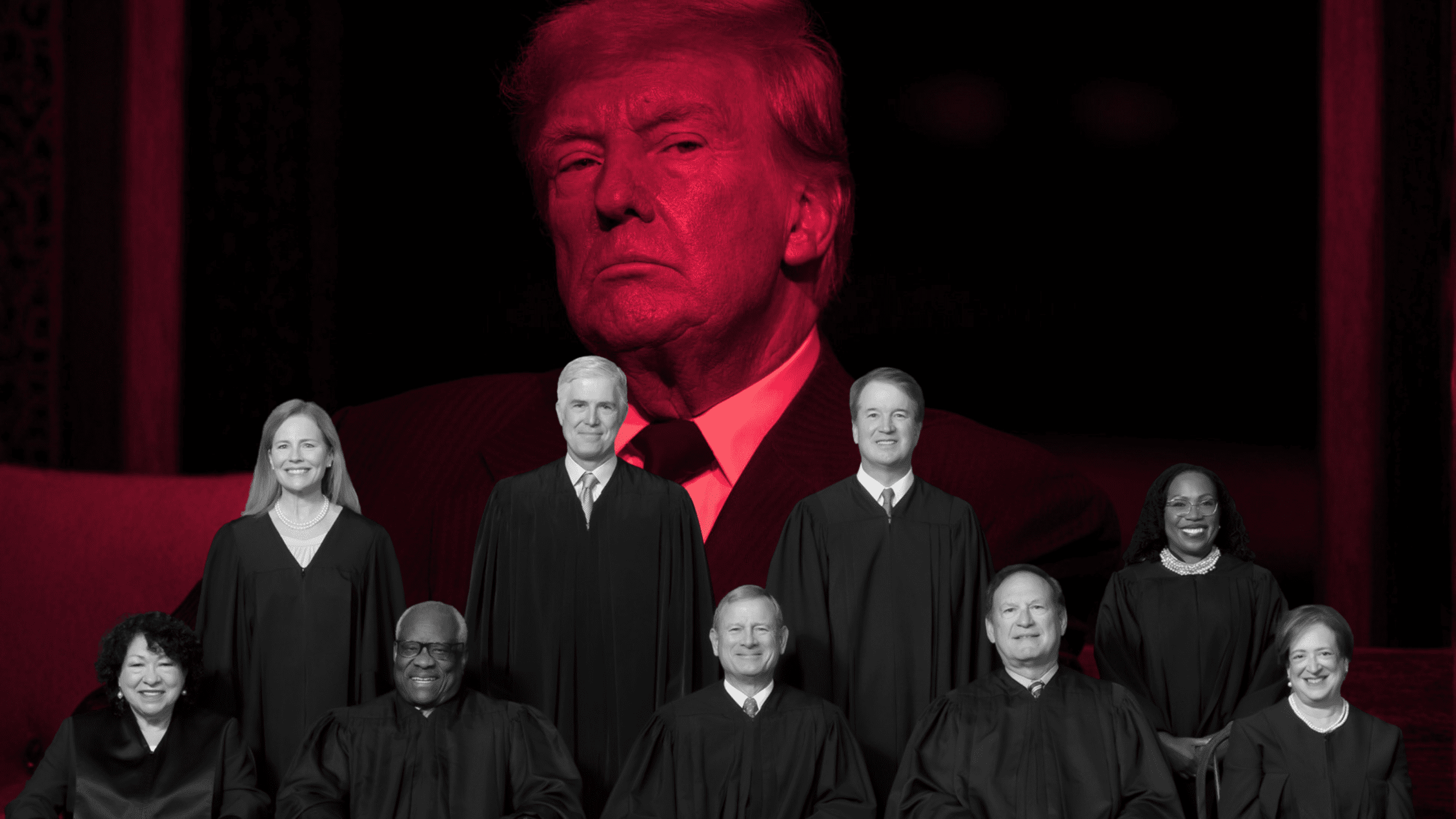
What’s Happening?
Right now, the Supreme Court is deciding one of the most important questions in a generation: Can President Trump use an executive order to strip automatic citizenship from babies born on American soil? The answer will affect hundreds of thousands of children, and the very meaning of what it means to be American.
Wait, what is birthright citizenship, exactly?
For over 150 years, the 14th Amendment has guaranteed that nearly everyone born in the U.S. is automatically a citizen, regardless of their parents’ status. The Supreme Court upheld this rule in the landmark 1898 case United States v. Wong Kim Ark. That case involved a man born in San Francisco to Chinese immigrant parents at a time when Chinese immigrants were barred from becoming naturalized citizens. The Court ruled that because he was born on U.S. soil, he was a citizen, confirming that citizenship by birth is protected even when parents themselves were excluded from citizenship.
What Changed?
In January 2025, on his very first day back in office, President Trump signed an executive order attempting to end this guarantee and impacted an estimated quarter of a million babies born in the U.S. each year. Federal judges across the country blocked the order, ruling it unconstitutional. Every single court that has looked at the merits of this order has ruled against it.
How is the Supreme Court involved?
On April 1, 2026, the Court heard arguments in Trump v. Barbara, with President Trump making a rare in-person appearance. His administration argued that the 14th Amendment’s phrase “subject to the jurisdiction thereof” should exclude children of undocumented immigrants and temporary visa holders.
But justices across the ideological spectrum, including conservatives, expressed strong skepticism. Chief Justice John Roberts emphasized that while times change, “it’s the same Constitution,” and Justice Elena Kagan underscored the long-standing legal foundation of birthright citizenship. Observers widely noted that no justice appeared sympathetic to the administration’s argument. A decision is expected by June.
This case also reflects a broader tension between Trump and the courts. He has repeatedly attacked judges who rule against him, raising concerns among legal experts about efforts to undermine judicial independence. At its core, this case is not just about citizenship, it’s a test of whether a president can use executive power to reinterpret the Constitution, and whether the courts will hold that line.
Why does this matter for our communities?
For Muslim American communities, many of whom are immigrants or have loved ones on temporary visas, the stakes are immediate and deeply personal. A ruling in Trump’s favor could mean children born in the United States grow up without citizenship, denied rights their birth on American soil was meant to guarantee. Legal experts warn this would create a permanent underclass, people born here, but never fully belonging.
While early signs suggest the Supreme Court may uphold birthright citizenship, this case goes far beyond one policy. It is a defining test of whether any president can unilaterally rewrite the Constitution, and who gets to be recognized as fully American. The outcome will shape not just the law, but the lived reality of our communities for generations.
Policy Perspectives
At the same time the Supreme Court weighs whether a president can rewrite the Constitution, another urgent question is before Congress: who decides how American power is used abroad?
As conflict between Israel and Iran escalates, Senators Bernie Sanders, Peter Welch, Jeff Merkley, and Chris Van Hollen are calling for a vote to block nearly $660 million in U.S. weapons sales to Israel. This follows a broader pattern from President Trump, from attempting to unilaterally end birthright citizenship to expanding executive authority in foreign policy with fewer checks from Congress.
These resolutions are a direct check on that power. Under existing law, Congress has the authority to stop weapons transfers, especially when there is credible evidence those weapons are contributing to civilian harm. U.S.-supplied weapons have been linked by human rights groups and reporting to deadly and indiscriminate bombing campaigns in Gaza, the West Bank, and Lebanon, resulting in tens of thousands of civilian deaths and widespread destruction of homes, hospitals, and critical infrastructure.
For our communities, the stakes are immediate. Continued arms sales risk deepening humanitarian devastation and expanding a regional war. Our communities are calling for accountability: that U.S. policy, at home and abroad, reflects the rule of law and the protection of human life.
The bottom line: A YES vote is a vote to uphold congressional oversight, rein in unchecked executive power, and ensure American actions align with our values, both domestically and globally.
On Our Radar
Sudan Advocacy Week: April 20 - 23
As the crisis in Sudan worsens, we’re organizing volunteers for our upcoming Sudan Advocacy Week to urge Congress to strengthen action on humanitarian access and civilian protection. Interested? Sign up today!
Ceasefire at Risk as Violence Escalates in Lebanon
As communities across the region brace for more violence, a fragile U.S.–Iran ceasefire is already under strain following Israeli airstrikes in Lebanon that have killed over 200 people, many in densely populated areas. These escalating attacks bring renewed grief and uncertainty for loved ones caught in the crossfire. The risk of wider war is growing, underscoring the urgent need for accountability, protection of civilians, and a meaningful path toward de-escalation.
Protect Our Rights, Support Our Work
Hate, voter suppression, and unconstitutional actions are on the rise, but together, we can fight back. Your donation helps Emgage Action hold leaders accountable, protect our communities, and defend our right to vote. Every dollar counts. Give today to make sure our voices are heard.